A client emailed us in March about her grandmother's band. It was a 5.5 and she wears a 7. We get that request weekly, and most of the time the answer is yes. Not always.
What decides it is the shank, not the stone. A plain band of 14k gold at 2mm thick has plenty of metal to work with. We cut it at the bottom, open or close the gap, weld it, then file and polish the seam until you cannot find it. Two sizes down or two sizes up is routine. Three is possible on a heavier band. Beyond that the band stops being round. It goes oval, and the inside shows a flat spot where the metal was pushed.
Sizing down is easier than sizing up
Taking metal out is simple. Adding metal in is a different job. Sizing up stretches the shank, which thins the bottom of the band. On a 1.6mm band that already feels delicate, one size up can take it to 1.3mm at the base. We can instead cut and solder in a piece of matching metal, which holds the thickness, but the seam is visible under a loupe unless the jeweler is careful. Ask which method is being used. A shop that only stretches is not giving you the full picture.
Why eternity bands are the hard case
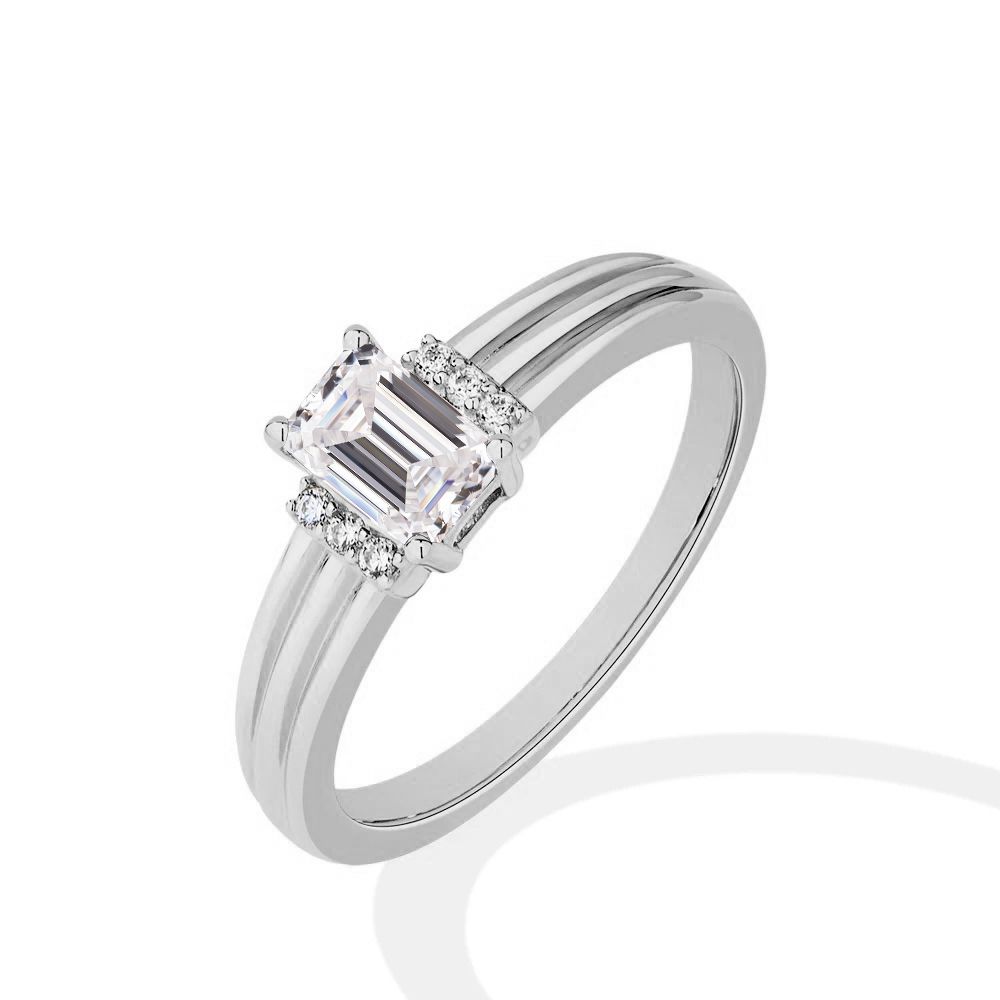
A full eternity has stones set the whole way around. There is no bare metal to cut into. To resize one we have to either remove a stone and its seat, or unset several stones, size the shank, then re-cut the seats and reset them. On a shared-prong eternity, the prongs hold two stones each. Move one seat by half a millimetre and the next prong sits wrong.
On our bench we quote eternity resizing at 3 to 5 working days instead of same-day, and we tell clients up front it costs roughly three to four times a plain band resize, often $180 to $400 depending on stone count. We also tell them the honest part: after a resize, an eternity band is never quite as tight as it left the factory. Half-eternity bands solve this. Stones across the top, plain metal at the bottom, resizable like any normal ring. If a client is between sizes when we build, we steer them there.
When the finger changes and the ring cannot
Arthritic knuckles, pregnancy, winter. These are the cases where metal work is the wrong answer.
Sizing beads are two small balls of metal soldered inside the bottom of the shank. They narrow the opening by roughly half a size without touching the top. Cost is low, usually $40 to $70. The tradeoff is real: you feel them, and some people find the two contact points annoying after a few weeks. We file ours down to a soft dome for that reason.
Spring inserts are a hinged strip of white gold that snaps inside the band. They add about a size and a half, and they open when the knuckle passes. If a knuckle is the problem and the finger base is small, this is the fix we reach for first. They run $60 to $120 fitted. They do collect hand cream and soap, so they need a scrub now and then.
What we check before quoting
- Shank thickness at the bottom, measured with a gauge. Under 1.4mm, we may refuse.
- Any previous resizing. Two seams on one band means the metal has been heated twice and has gone brittle.
- Solder type. A band repaired with a soft lead solder cannot take another heat cycle safely.
- Channel-set or tension-set stones near the cut point. We unset before cutting, never after.
One more thing worth knowing. Titanium and tungsten carbide rings generally cannot be sized at all. Tungsten is far too hard to work and will crack. Titanium can be welded in a controlled atmosphere by a specialist, but most shops will simply refuse. If you buy one of those, buy it in the right size the first time.